
Cash crops
Cocoa, coffee, cotton, rubber…: structuring, quality, premium markets.
Cocoa: Centre (~50%), South-West (~32%), Littoral, South, East. Coffee: robusta in Centre/South/Littoral, arabica in West/North-West. Cotton: Far North, North (SODECOTON). Rubber: South-West, Littoral.
9 regions out of 10
Schematic map — relative positions, not to scale.
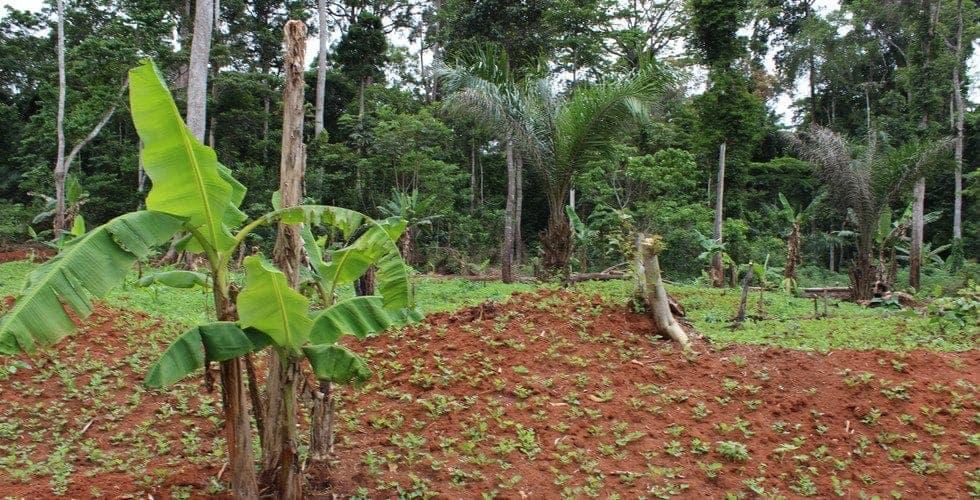
Cocoa, coffee, cotton, rubber: cash crops are the backbone of Cameroon's agricultural exports and the main income of hundreds of thousands of rural families.
- Ageing orchards and low yields per hectare.
- EUDR compliance (traceability, plot geolocation) for access to the European market.
- Low share of local processing: value leaves as raw exports.
- Premium and certified markets (organic, fair trade, origin) growing strongly.
- High-value local processing (cocoa butter, roasted coffee).
- Replanting and sustainable intensification supported by donors.
High-performing, sustainable orchards are the foundation of a competitive cash-crop value chain.
- Replanting and rejuvenation of ageing orchards (cocoa, coffee).
- Selected planting material and sustainable technical itineraries.
- Agroforestry and practices favourable to soils and climate.
- Organising producers into cooperatives to weigh on prices.
Value too often leaves as raw exports: local processing changes the equation.
- Controlled fermentation and drying: quality is decided after harvest.
- First processing: cocoa butter and powder, roasted/ground coffee.
- Batch consistency and quality standards required by buyers.
- Processing units anchored in the production basins.
Move beyond farm-gate sales to capture the value of organised markets.
- Contracting with exporters, processors and industrials.
- Growing premium and certified markets (organic, fair trade, origin).
- Cooperative bulking and warrantage for better prices.
Access to the European market is now conditioned on traceability.
- EUDR compliance: plot geolocation and due diligence.
- Certificates of origin, quality and documentation (CEMAC, AfCFTA).
- Traceability from plot to container.
Agrovita structures the value chain, from plot to market.
- Diagnosis, replanting and technical engineering of orchards.
- EUDR compliance and digital traceability.
- Cooperative structuring and access to premium markets and export.
From raw material to the circular economy (N1 → N4)
Note NS-20260829/DG/XPN-REF1: four processing levels, from raw packaged product (N1) to recovered by-products and waste (N4), with the destination industrial sector(s).
Dried/fermented cocoa beans, bagged; pulped and bagged coffee cherries; ginned cotton in bales; coagulated latex in blocks (cup lump).
Cocoa mass, butter and powder; roasted, ground green coffee in industrial bulk; carded/spun cotton fibre; crude cottonseed oil; granulated rubber (TSR/crepe).
Chocolate bars and confectionery; packed/capsule roasted coffee; finished textiles; tyres and rubber goods.
Cocoa pod husks (mulch, compost); coffee grounds (biofuel, fertiliser); cottonseed (cake, food oil); latex waste (energy recovery).
The product type describes what leaves the farm or the unit, in its state of sale — it is what triggers processing, cold-chain, compliance and certification services.
Market, post-harvest, logistics.
Cold chain, storage, corridor, product compliance.
Unit sizing, energy, food safety management.
Full unit, HACCP, labelling, brand.
Certification, traceability, access to premium markets.
44 referenced risks, rated and tied to a control plan. The dominant families for this value chain:
- Building a bankable file — The 7 items funders really expect — and the mistakes that get a file rejected out of hand.
- EUDR compliance for producers — The European deforestation regulation: what changes for Cameroonian cocoa, coffee and rubber.
- Quality certification checklist — GLOBALG.A.P., Organic, HACCP: where to start depending on your actor profile and your value chain.
- Structuring your financial plan — The CAPEX / OPEX / cash-flow-per-cycle method, applied to crop and livestock projects.
- Monter un dossier bancable — les 7 composantes essentielles — Ce qu'un comité de crédit attend réellement : les 7 composantes d'un dossier de financement solide.
- Guide de conformité aux exigences d'exportation — Règlement Déforestation (RDUE) Cacao & Café — Exporter vers l'UE après le RDUE : géolocalisation des parcelles, diligence raisonnée et preuves attendues.
- Fiche fiscale 2026 — Fiscalité foncière et sécurisation agricole au Cameroun — Ce que la Loi de Finances 2026 change pour vos terres : exonérations de TPF pour l'agriculture, l'élevage et la pêche, frais de bornage réduits de moitié, et l'immatriculation foncière en 4 étapes budgétées en FCFA.
- Guide 2026 des financements agricoles et agro-industriels au Cameroun — Les guichets qui financent réellement l'agriculture et l'élevage — BC-PME (FINAGRO, PIISAH), ACEFA, CamCCUL, MINADER, AFD (C2D), BAD — et la méthode pour leur présenter un dossier bancable.
- Auto-évaluation OHADA — votre GIC ou coopérative est-il éligible aux crédits ? — Grille de diagnostic en 4 domaines (structure juridique, comptabilité, gouvernance, sûretés) pour situer votre groupement face aux exigences de l'Acte Uniforme OHADA — la clé d'accès aux guichets de financement.
- The agricultural export procedure — Steps, actors and the 22 document templates.
- The documents area — pieces to gather and templates, including the export documentary file.
- AGROEXPORT — this value chain's prices are tracked internationally, by subscription.
Where projects in this value chain begin
A promoter seeking finance who wants the complete file in one engagement, rather than chaining pre-qualification, investment decision and financial structuring separately.
Indicative duration: About 16 weeks →Pre-qualify pathwayA promoter with an intention, a plot or an opportunity, but nothing formalised.
Indicative duration: 2 to 4 weeks →Decide to invest pathwayA promoter whose idea is mature and who is considering a significant financial commitment.
Indicative duration: 6 to 10 weeks →Design the facility pathwayA decided project whose means of production must be settled before costing.
Indicative duration: 8 to 14 weeks →Finance pathwayA designed project seeking financing matched to its cycle.
Indicative duration: 10 to 18 weeks →Sell and get paid pathwayA producer or processor who is producing and must now sell.
Indicative duration: 12 to 24 weeks →